The 'Main Character Energy' Epidemic
- Joseph Haddad
- Feb 2
- 7 min read
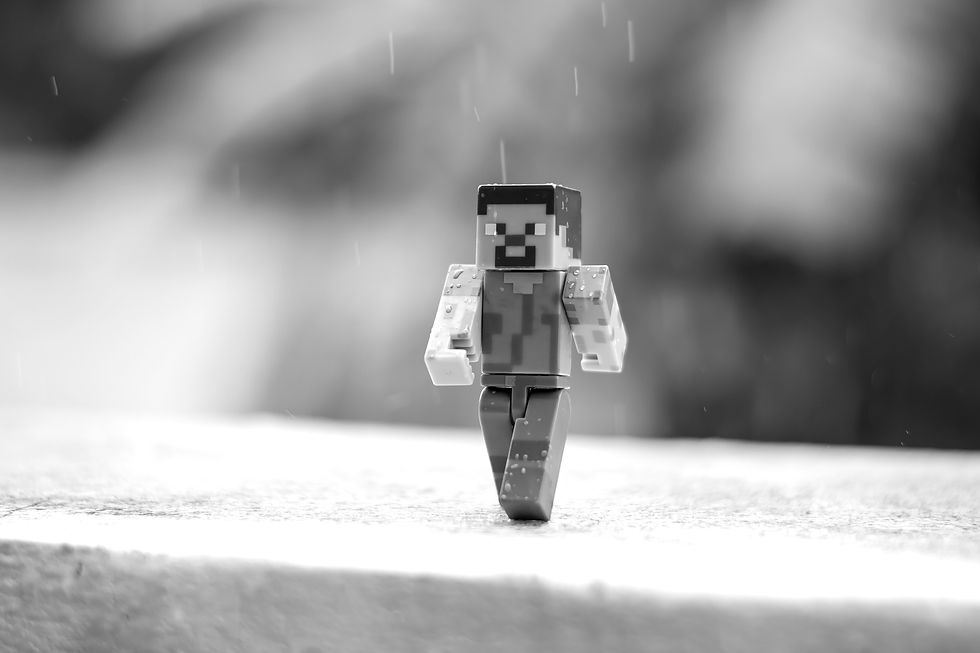
You’ve seen the videos. You’ve probably even felt the feeling. It’s that moment when the sun hits just right, your playlist shuffles to the perfect song, and you’re walking down the street in a particularly good outfit. The world seems to slow down, a cinematic filter washing over your vision. You are not merely a person running errands; you are the protagonist in the opening scene of a critically acclaimed indie film. The barista who spells your name wrong isn't an inconvenience; they are a quirky supporting character. The traffic jam isn't a delay; it's a moment for pensive reflection, staring out the window as raindrops race down the glass.
This is “Main Character Energy.” It’s a term born on TikTok, a viral sensation that captures the act of romanticizing your own life, framing your experiences—mundane or magnificent—as part of a compelling narrative arc. It’s an aesthetic, a mindset, and a coping mechanism all rolled into one. On the surface, it’s empowering. It’s a call to reclaim your own story, to see yourself as the agent of your destiny rather than a background extra in someone else’s life.
But what if I told you that this very modern, very digital phenomenon is a direct, if unintentional, conversation with one of the grumpiest, chain-smoking, coffee-shop-dwelling philosophers of the 20th century? What if “Main Character Energy” is just a Gen Z rebrand of French Existentialism?
Meet Jean-Paul Sartre. A man whose name is synonymous with black turtlenecks, intellectual gloom, and ideas so heavy they could anchor a battleship. Sartre would have been utterly bewildered by TikTok, but he would have instantly recognized the philosophical engine driving its most introspective trend. Because at the heart of his entire philosophy is a single, terrifying, and profoundly liberating idea that serves as the bedrock of Main Character Energy: You are the author of your own life. Period.
The Terrifying Freedom of Being the Protagonist
Sartre's most famous existentialist catchphrase is “existence precedes essence.” It sounds complicated and academic, but the idea is actually quite simple and revolutionary.
Think about how we normally view things. A paperknife, for example. Before it ever exists, someone has an idea of it. They think, “I need something to open letters. It should have a handle and a blade. It should be sharp, but not too sharp.” This concept, this essence, comes before the physical knife is ever created. The knife is born with a purpose. Its whole meaning is predefined.
For centuries, most of philosophy and religion assumed humans were the same. We were created by a god, or by nature, with a built-in purpose—an essence. We were here to be good servants, rational thinkers, or a specific cog in the grand cosmic machine. Our story was, in a sense, already written.
Sartre looked at the modern world, a world shattered by war and stripped of its religious certainties, and said, “Nope.” He argued that for human beings, the script is flipped. We are born without a predefined purpose. We simply exist. We are thrown into the world as a blank slate, a conscious void. It is only after we exist, through the choices we make, the actions we take, and the values we create, that we define our essence.
This is Radical Freedom. You are not born a hero, a villain, a coward, or a saint. You become one of these things, moment by moment, choice by choice. There is no divine blueprint, no human nature, no cosmic destiny to fall back on. You, and you alone, are responsible for creating your own meaning and defining who you are.
Doesn't that sound familiar? “Romanticize your life.” “Be the main character.” These aren't just catchy slogans; they are commands to engage in the Sartrean project of self-creation. When a TikTok user meticulously edits a montage of their trip to the grocery store, setting it to an ethereal soundtrack, they are performing existentialism. They are taking a mundane slice of their existence and, through a conscious act of creative will, imbuing it with meaning, narrative, and beauty. They are defining their essence as someone whose life is cinematic and significant. They are, quite literally, choosing to be the protagonist.
"Condemned to be Free": The Anxiety of an Open World Game
Now, this is the part where the upbeat, aesthetically pleasing world of TikTok diverges from the smoky, angst-ridden cafes of post-war Paris. While Main Character Energy often focuses on the empowering, glamorous side of self-authorship, Sartre was obsessed with its terrifying downside. He famously declared that we are “condemned to be free.”
It’s a chilling phrase. Condemned? Isn't freedom supposed to be a good thing?
Imagine you’re playing a video game. An open-world RPG like Skyrim or The Legend of Zelda: Breath of the Wild. You’re dropped into a massive world with no clear instructions. You can go anywhere, do anything. You can follow the main quest, spend a hundred hours picking flowers, become a master thief, or just try to climb the highest mountain. The freedom is exhilarating. But it’s also paralyzing. What’s the right thing to do? What if you miss something important? What if you choose the wrong path? The sheer weight of infinite possibility can be crushing.
This is what Sartre meant. We are condemned to be free because we can never escape the burden of choice. Every single moment, we are choosing. Choosing to get out of bed is a choice. Choosing what to wear is a choice that defines your "character" for the day. Choosing your career, your friends, your morals—these are all choices you must make without a guidebook. You can't not choose. Even choosing not to choose is, itself, a choice.
And because there’s no pre-written script, no God or universal morality to tell you that you’ve made the “right” choice, you are left with the full, crushing weight of responsibility for your life. This responsibility, Sartre says, is the source of our deepest anxiety, our existential dread (or angoisse, in French).
This is the hidden dark side of Main Character Energy. The pressure to live a life worthy of a film is immense. Every moment must be curated, every experience optimized for the narrative. What happens when your life doesn't feel cinematic? What about the boring days, the awkward moments, the failures, the periods of depression?
The TikTok narrative often glosses over this. It shows the highlight reel—the beautiful sunrise, the successful project, the joyful tears. It rarely shows the agonizing indecision that came before, or the quiet dread of wondering if you’re authoring the right story. The pressure to perform “protagonist” can become its own kind of prison, where any deviation from the compelling narrative feels like a personal failure. You are the writer, director, and star of your own life, and if the movie sucks, there’s no one to blame but yourself. That is true Sartrean angoisse.
The Escape Hatch: Are You Living in "Bad Faith"?
So, we have this radical, terrifying freedom. We are responsible for every aspect of our self-created essence. The anxiety is almost unbearable. What do we do? We look for an escape. And Sartre had a name for this escape: Bad Faith(mauvaise foi).
Bad Faith is the act of lying to ourselves to pretend we are not free. It’s the ultimate abdication of our main character duties. We do this in two main ways:
Pretending we are a thing, not a person: We pretend we are like the paperknife—an object with a fixed essence. We say things like, “I can’t help it, that’s just my personality,” or “I have to do this job, I don’t have a choice,” or “It’s my zodiac sign, I’m a classic Scorpio.” We blame our genetics, our upbringing, our social role, or the stars—anything to avoid the terrifying reality that we are choosing to be this way, every single second. The waiter who acts overly "waiter-ish," hiding his personal freedom behind the rigid performance of his job, was Sartre's classic example. He is playing a role so he doesn't have to confront the man behind it.
Pretending we are pure, unbound consciousness with no connection to reality: This is the other side of the coin. It’s the person who says, “The rules don’t apply to me,” or who makes promises they have no intention of keeping, acting as if their actions have no real-world consequences. They deny the factual reality of their situation and their body, pretending they are a disembodied spirit of pure potential.
Now, let’s bring this back to TikTok. Main Character Energy, when it’s authentic, is the opposite of Bad Faith. It’s a radical acceptance of one’s freedom to create meaning. But the performance of Main Character Energy can easily curdle into a new and insidious form of Bad Faith.
Are you genuinely romanticizing your life, or are you just performing the role of "The Main Character" for an online audience? Are you making choices that align with your self-created values, or are you making choices that you think will look good in a 15-second video?
The line becomes blurry. The aesthetic can replace the reality. When your identity is reduced to a collection of "cores" (cottagecore, goblincore, dark academia), you risk falling into Bad Faith. You're not freely creating yourself; you're adopting a pre-packaged essence, a costume. You’re playing the role of the "Dark Academia Main Character," and in doing so, you are denying your freedom to be something else, something messier and more authentic that doesn’t fit neatly into a hashtag. You are hiding from your radical freedom by pretending to be a thing—an aesthetic.
The Editor's Cut
In the end, the viral trend of Main Character Energy serves as a perfect, real-world laboratory for Sartre’s existentialism. It reveals our deep, innate desire to be the authors of our own stories, to wrestle meaning from the chaos of existence. It’s a testament to the human spirit’s rebellion against meaninglessness.
But it also highlights the profound anxieties that come with that freedom. The pressure to craft a perfect narrative, the temptation to escape into the Bad Faith of a performed identity, and the quiet dread that our movie might not have a happy ending—or any ending at all.
Sartre wouldn’t tell you to stop romanticizing your life. On the contrary, he would argue that it is your most fundamental project. But he would caution you to distinguish between authentic self-creation and the hollow performance of a role. Being the main character isn’t about having the most aesthetic life; it’s about having the most chosen life. It's about looking at the terrifying, blank page of your existence and having the courage to write the next sentence yourself, without excuses and without a script.
So, the next time you find yourself framing your world as a movie, ask yourself: are you truly directing your own film, or are you just auditioning for a part you think the world wants you to play?


Comments